Home office, Interior Design, Small spaces
Tiny Home Office
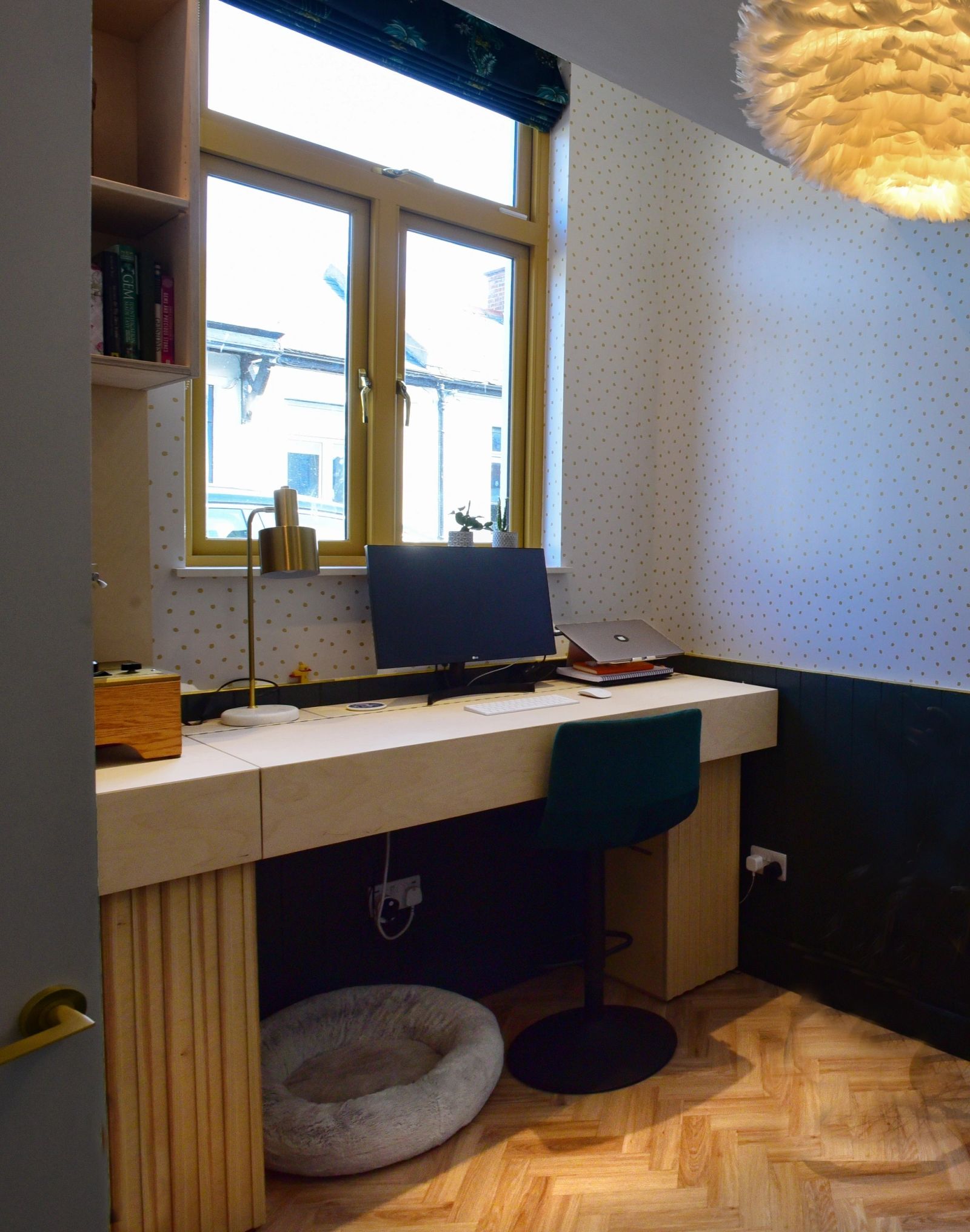
Desk with shelves above and beneath. Cover lifts to reveal a hidden keyboard for after work.
There has been a huge evolution in the home office, for obvious reasons. Gone are the days of a dark mahogany study, or a messy kitchen table for those of us who don't have studies. We are now in an era of sleek ergonomic chairs that actually look nice, wow-factor backgrounds for video calls, and - for us small home dwellers - a need to transform some part of our home into an office where we can get some privacy for at least part of the day.
Find a multi-purpose desk: Your work will dictate how much desk space you need. Depending on the space available to you, L- or U-shaped corner desks are excellent for those who need more space for a variety of tasks. My desk has two surfaces - a desktop for daytime working on my laptop, which then lifts up to reveal my keyboard underneath, allowing me to use my home office as a music room after work.
Get storage: Storage is key if you need to use your office space for other purposes after work. Get shelves or drawers underneath or above your desk to save space.
Choose comfortable furniture: Admittedly the phrase “ergonomic chair” doesn’t typically spark much excitement. Aesthetically pleasing ergonomic office chairs are increasingly available, but I say always choose comfort over style for a chair you sit in for most of your day. Make sure your chair is height adjustable, stable, has armrests, good lumbar support, and can recline or at least tilt. If you can afford it, Herman Miller is a great manufacturer of beautiful, well made, and comfortable office chairs that will last a lifetime.
Standing desks - or risers which can be placed on regular desks - are excellent for incorporating more movement into your working day. Check out Flying Elephant for great value standing desks and risers, made in Ireland.
Create a partition: If you're in an open plan space, I suggest getting a room divider to separate your work and living space. Room dividers give you visual privacy and a feeling of separation which is important at the end of the working day, but also can provide sound privacy if you cover them in a thick fabric. Bookshelves also work great for this purpose with the bonus of giving you a great video call background.
Get good lighting: Lighting is another important factor to consider when creating a productive home office. Natural light is best, so try to position your desk near a window. If you don't have much natural light, you can use artificial lights to create a bright and inviting space.
Avoid overhead lights, which can be harsh and glaring. Instead, use task lighting to illuminate specific areas of your desk. You can also use floor lamps or table lamps to create a more ambient light.
Choose the right colours: Colours have a big impact on our mood and productivity. When choosing colours for your home office, it's important to consider the type of work you do and the atmosphere you want to create.
If you need to be alert and focused, you may want to choose cool colours like blue or green. If you need to be creative, you may want to choose warmer colours like yellow or orange.
You can also combine different colours to create a more balanced environment. For example, you could paint your walls a calming blue and add pops of yellow or orange with accessories.